Skip to content
AirFreight logo with topographic patterns AirFreight logo with topographic patterns

Cargo Aircraft

Shared loads and rerouted freight are the two fastest ways to miss a critical deadline. AirFreight.com secures dedicated cargo aircraft—aircraft designed specifically for freight, unlike passenger aircraft—so your freight is the only freight on the plane, moving on your timeline, with a specialist managing every handoff from booking through delivery.

CALL US AT (800) 713-8183

hero-dassault-falcon

Trusted By Our Most Valuable Partners

Air Freight Modes for Every Cargo Type

Air Freight Modes for Every Cargo Type and Aircraft Types

Whether you need to move small parcels, oversized machinery, or temperature-sensitive goods, we match your shipment to the ideal air freight mode and aircraft types—including narrow-body, wide-body, and dedicated cargo aircraft—ensuring your cargo is transported efficiently and securely.

This is the core distinction between air cargo aircraft charter and commercial freight aircraft services. Scheduled airlines move freight on available belly space or dedicated freighter routes, both subject to cutoff windows and network routing. Cargo aircraft for hire bypasses that entirely, sourcing a plane matched to your freight dimensions, weight, and timeline.

AirFreight.com operates as an air charter broker with access to a broad network of freight carriers and expedited carriers. Cargo carriers operate various aircraft types designed for efficient cargo transport, including specialized freighter planes and mixed-use models, to ensure reliable movement of goods across domestic and international routes. Whether the move requires a full-plane charter, same day air, or a combination of cargo plane shipping and expedited ground transport, the team coordinates the full solution, not just the flight.

EXCLUSIVE CAPACITY Air Freight

Full-Plane Air Cargo Charter

When volume, urgency, or sensitivity demands a dedicated plane, a full-plane cargo aircraft charter is the right call. Your freight fills the aircraft exclusively, eliminating shared handling, intermediate transfers, and the scheduling constraints of commercial freight aircraft services. Ideal for oversized, high-value, or mission-critical shipments, these aircraft are specifically built to carry large loads efficiently.

SAME DAY AIR Air Cargo

Same Day Air and Next Flight Out

Not every urgent shipment requires a full charter. Same day air and next flight out options place your freight on the earliest available commercial or charter departure, often within hours of booking. These expedited shipping services suit smaller, time-sensitive loads that need to move before the next scheduled service window closes.

EXPEDITED GROUND Air Freight Services

Expedited Ground: Hot Shot to Semi

A cargo plane handles the long haul, but the final leg often requires ground execution. AirFreight.com coordinates expedited ground transport using sprinter vans, straight trucks, flatbeds, dry vans, and semi trucks. Hot shot services handle urgent, smaller loads while full truckload options cover larger freight, completing door-to-door coverage nationwide.

Dedicated Cargo Aircraft Ready for Your Most Urgent Freight

Request a Quote

A Dedicated Specialist from Quote to Delivery

Sourcing a cargo aircraft is only part of the equation. The harder work is coordinating everything that happens between the booking call and the moment freight reaches its destination. AirFreight.com's team manages that entire process, acting as your air charter broker and ground logistics coordinator in one.

Your account manager evaluates shipment requirements, confirms aircraft availability, arranges ground handling at origin and destination, and keeps your operations team informed at every milestone. For moves that combine cargo aircraft freight solutions with ground transport, the same coordinator works with hot shot trucking company partners and freight carriers without requiring you to manage separate vendor relationships.

Request a quote and put a specialist on your shipment today.

Request a Quote Now

Add your shipment details below, and one of our professional expeditors will contact you within minutes. For immediate assistance on an urgent quote, call (800) 713-8183 with these details handy.

AIR CHARTER SERVICES

AIR FREIGHT EXPLAINED

When a shipment is critical, air freight is usually the answer. But which kind? Some aircraft are designed specifically for cargo transport, featuring optimized loading and unloading capabilities, while others are converted from passenger use and may not be tailored exclusively for freight needs. This video breaks down your two main options: commercial air freight and air cargo charter, and explains when each one makes sense.

Request a Free Freight Quote

Explore Our Expedited Freight Solutions

KEY BENEFITS

NATIONWIDE NETWORK
SINGLE POINT of CONTACT
DEDICATED EXPERTISE
REAL-TIME TRACKING

NATIONWIDE NETWORK

AirFreight.com connects shippers to a nationwide and global network of freight carriers, sourcing space across cargo aircraft for hire, freighter aircraft, and commercial belly options. Whether your freight arrives at a major hub or a regional airport, the network reaches virtually any delivery point without forcing your shipment through unnecessary transfer points or shared consolidation.

EXPLORE OUR COVERAGE
Air Freight Shipping

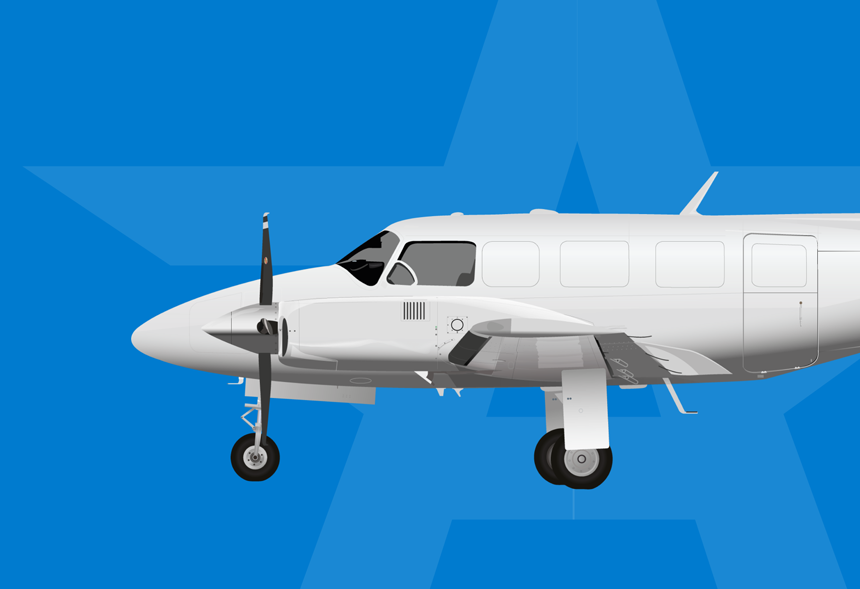
Piper PA‑31

A twin‑engine, turbocharged workhorse, the PA‑31 serves corporate, commuter, and light‑cargo missions. It seats nine, and its wide rear doors with quick‑release seats let crews switch quickly to air‑ambulance, combi, or full‑freight layouts.

Operators value its reliability, short‑field performance, and ability to use small rural or island strips. Turbocharged piston engines cut fuel and maintenance costs versus comparable turboprops, keeping trips economical on short‑ to medium‑range routes.

Learn More About the Piper PA-31


Piper-PA-31-thumb

Cessna 406 Caravan II

The Cessna 406 Caravan II is a light, twin‑turboprop built for flexibility. It seats up to 12 passengers, yet the cabin converts in minutes to haul 196 ft³ of cargo weighing 3,085 lb. Its pressurized cabin supports flights to 30,000 ft, protecting crew and pressure‑sensitive freight.

A two‑panel cargo door behind the left wing speeds loading: the left panel swings out, and the right opens clamshell‑style—upper half up, lower half down and clear. An optional belly pod adds space for smaller items.

Compact dimensions, short‑field capability, and the ability to operate from firm grass or dirt strips let the 406 reach remote sites that larger aircraft can’t, making it a prime choice for line‑down deliveries.

Learn More About the Cessna 406 Caravan II
Cessna 406 Caravan II-thumb

Pilatus PC‑12

The Pilatus PC‑12 is a powerful single‑engine turboprop with an executive cabin for up to eight passengers. Seats can be removed in minutes, turning the interior into a partial or full‑cargo bay.

A wide cargo door aft of the left wing lifts clear of the opening, leaving room to hand‑load freight, roll loads up a ramp, or position a forklift for pallets.

Robust landing gear, generous prop clearance, and strong thrust give the PC‑12 excellent short‑field performance on paved, gravel, grass, or dirt strips as well as standard airports.

Learn More About the Pilatus PC‑12


PC-12-thumb

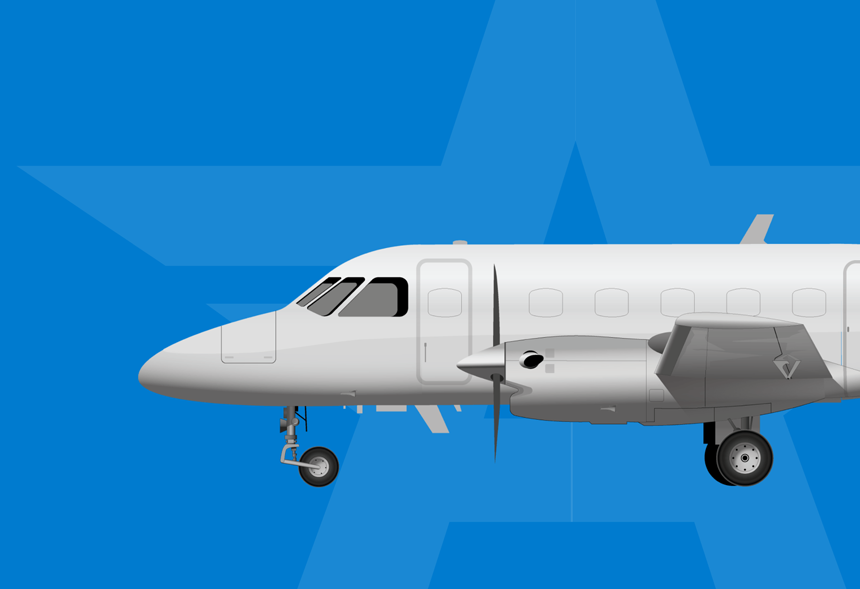
Embraer EMB‑110 Bandeirante

This light, twin‑turboprop serves both civil and military roles. Its pressurized cabin seats up to 18, and the airframe adapts easily for surveillance, maritime patrol, or search‑and‑rescue missions.

Cargo is its forte on regional routes: a wide left‑side door aft of the wing and a flat floor speed loading of pallets, mail, and light industrial parts.

Robust engines and short‑field capability let the EMB‑110 use rough, underdeveloped strips. Modular systems and simple construction keep field repairs fast—ideal for remote operations.

Learn More About the Embraer EMB‑110 Bandeirante


Embraer-EMB-110-thumb

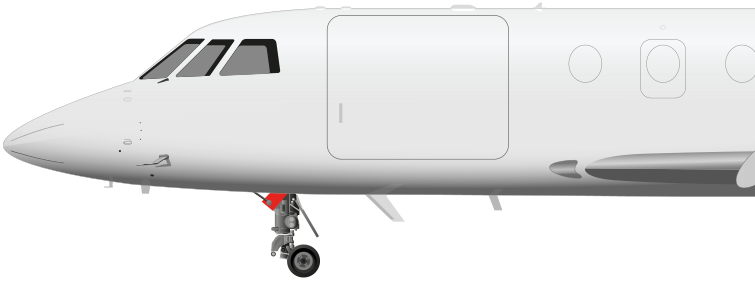
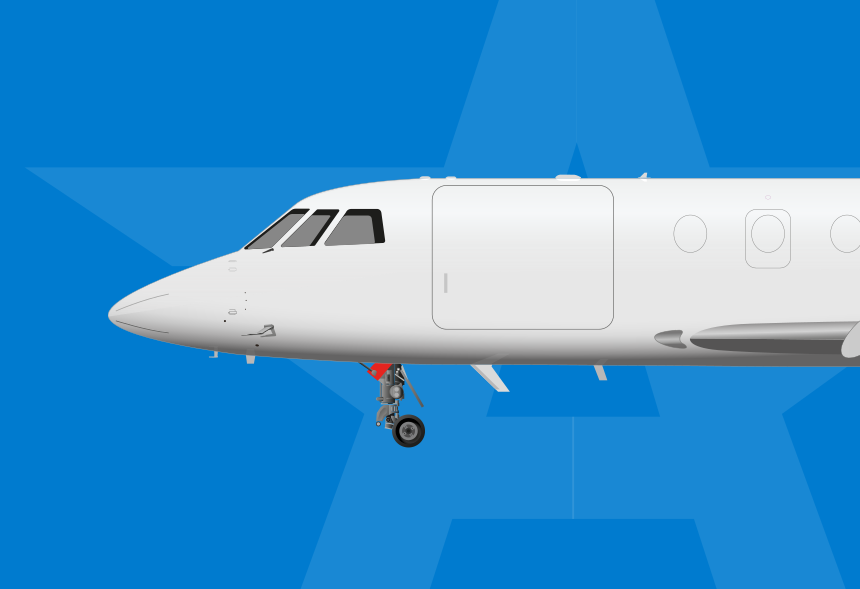
Dassault Falcon 20

This mid‑size twin‑turbofan jet seats 14 but can quickly switch to charter, medevac, military, or freight roles. Operators appreciate its reliability, economy, and ability to use shorter runways while matching the speed and range of larger jets.

A wide left‑side cargo door just aft of the cockpit accepts outsized loads and swings up clear for belt loaders, forklifts, or scissor lifts. Though built for paved strips, the Falcon 20 can also handle firm grass, and—with engine‑protection kits—well‑maintained gravel or dirt runways.

Learn More About the Dassault Falcon 20


Dassault Falcon 20-thumb-1

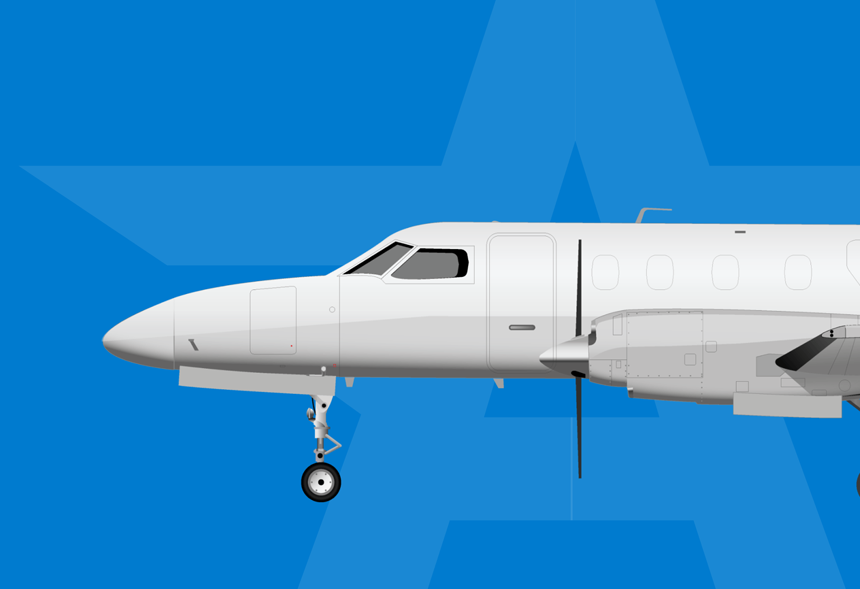
Fairchild Metro II

A fast twin‑turboprop regional airliner, the Metro II seats 19 in a pressurized cabin and once linked many small fields to major hubs.

As passenger demand waned, most were refitted for cargo or medical roles, where the long fuselage provides ample workspace. The aircraft carries hefty loads of packages and express mail, and its high‑altitude cruise maximizes speed, range, and efficiency when moving sensitive freight.

Learn More About the Fairchild Metro II


Fairchild-Metro-III-thumb

Fairchild Metro III

An enhanced Metro II, this twin‑turboprop adds stronger engines, higher MTOW, extra fuel, and cleaner aerodynamics while still seating 19 for quick regional hops.

As passenger use waned, many airframes switched to freight or medevac duty. Better soundproofing and a higher payload suit express mail and light cargo.

Among the fastest in its class, the pressurized cabin cruises high, using that speed and range to move sensitive goods economically.

Learn More About the Fairchild Metro III


Fairchild-Metro-III-thumb

Shorts SD 360

This twin‑turboprop seats up to 36 and was purpose‑built for short‑haul, low‑capacity routes that are inefficient for larger jets. Airlines, governments, and militaries use it in many roles, while cargo firms appreciate its roomy hold for small packages and express freight.

A rugged airframe, short‑field ability, and economical turboprops suit airstrips with limited infrastructure. The SD 360 also serves charter, medevac, and disaster‑relief missions to remote regions.

Learn More About the Shorts SD 360


Shorts SD 360-thumb

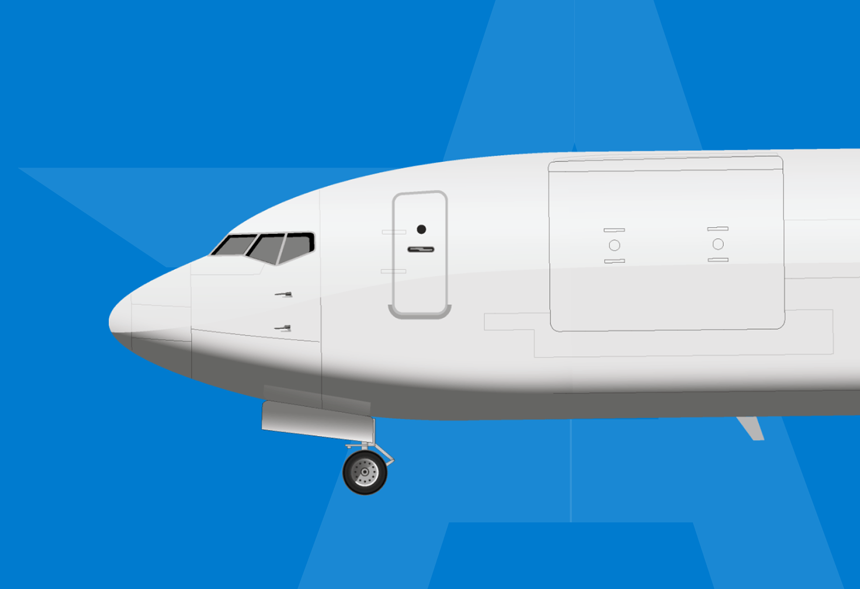
Boeing 737‑300F

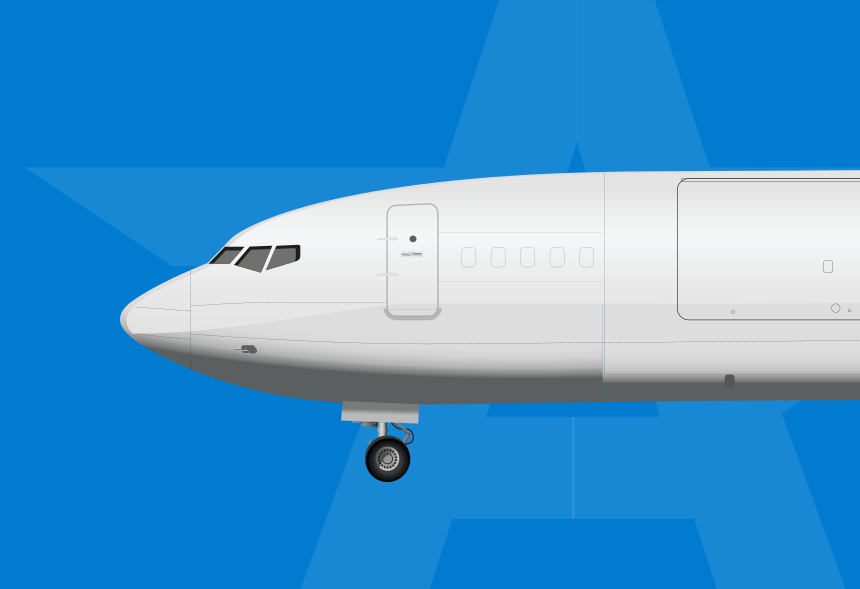
The 737‑300 is a narrow‑body twin‑turbofan prized for its sturdy, adaptable design. It seats 180 passengers in airline trim; the 737‑300F freighter swaps seats for a wide cargo door and reinforced floor to haul heavy loads.

On medium‑haul routes the 300F delivers strong payloads, fuel‑efficient performance, and low upkeep thanks to plentiful spare parts. Its short‑runway ability lets it serve small airports beyond wide‑body reach.

Designed for brief paved strips at regional and major fields, the jet can be modified for gravel or unpaved runways, opening undeveloped destinations when needed.

Learn More About the Boeing 737‑300F

Boeing-737-400F-thumb

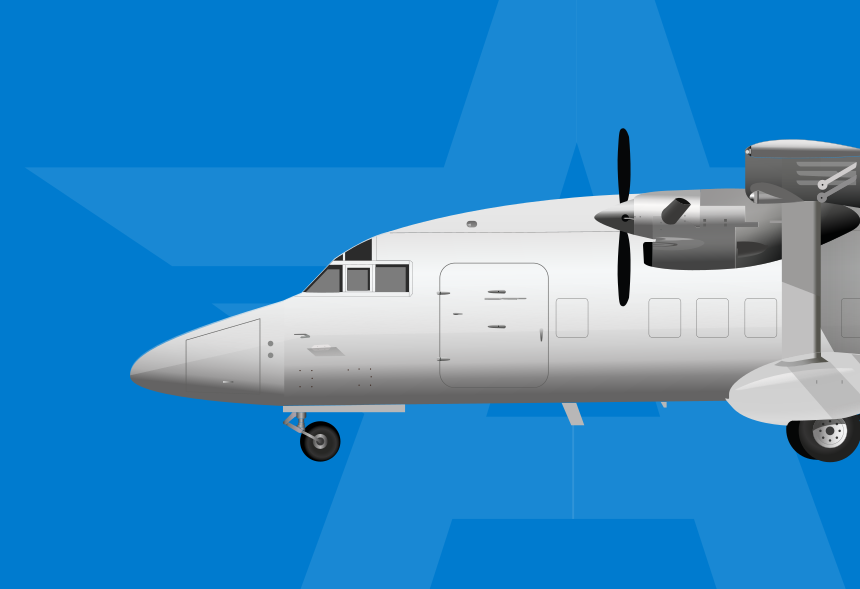
Antonov An‑26

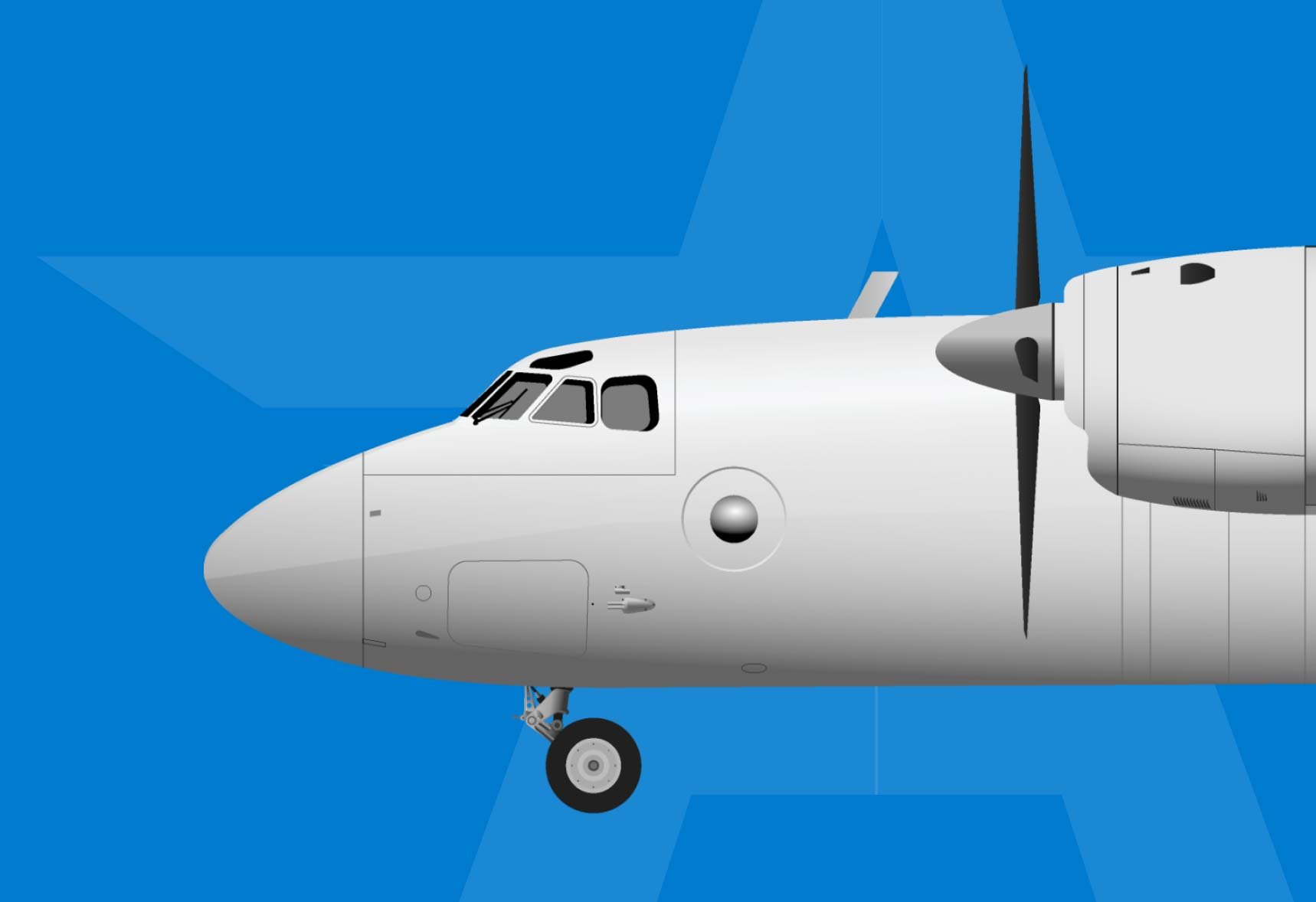
This twin‑turboprop’s rugged build and simple upkeep suit harsh conditions. It hauls disaster‑relief supplies, heavy or outsized freight, and research gear to remote sites.

A rear retractable ramp speeds loading: vehicles drive on, while forklifts handle crates and bulk goods.

Excellent short‑field and high‑altitude performance lets the An‑26 use unprepared or mountain strips in demanding wind and weather.

Learn More About the Antonov An‑26

Antonov-An-26

Convair CV‑580

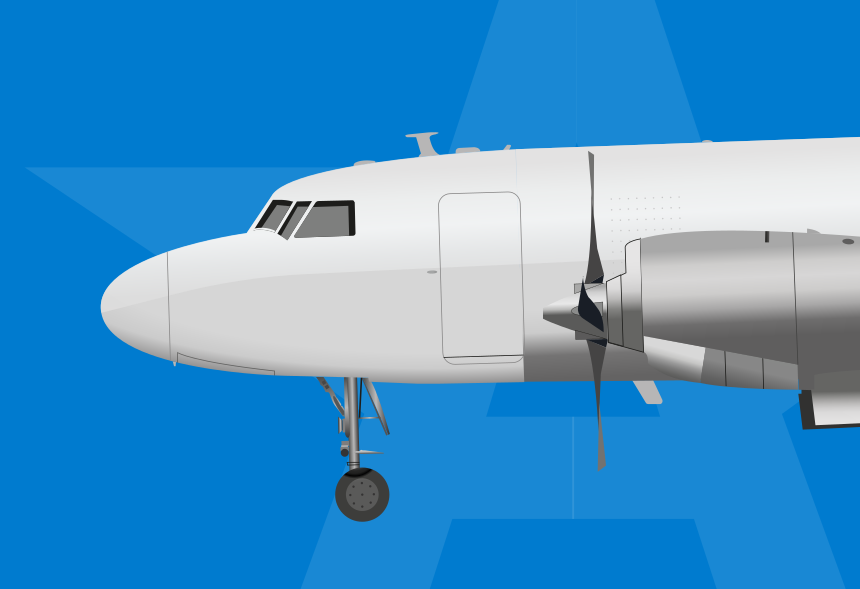
This twin‑turboprop serves commercial, government, and military operators across the Americas and Australia. It seats 50 in airline trim; as a freighter, it’s valued for versatility, reliability, and rugged performance in remote areas.

Cargo loads via a wide aft door onto a single main deck, accepting pallets, containers, and bulk goods with forklifts or belt loaders.

Strong short‑field capability lets the CV‑580 operate from paved, grass, gravel, or dirt strips—even at high‑altitude bases—making it a dependable choice for tough cargo missions.

Learn More About the Convair CV-580

Convair CV-580-thumb

McDonnell Douglas DC‑8 71/73F

These four‑engine, narrow‑body jets were built for 250 passengers but converted to freighters with large payloads and true long‑range reach.

Rugged airframes, proven systems, and high cruising ceilings let them fly above most weather and handle high‑elevation airfields. Their hefty payloads more than offset the extra fuel burn compared with newer, more efficient types.

Learn More About the McDonnell Douglas DC‑8 71/73F

McDonnell-Douglas-DC-8-thumb

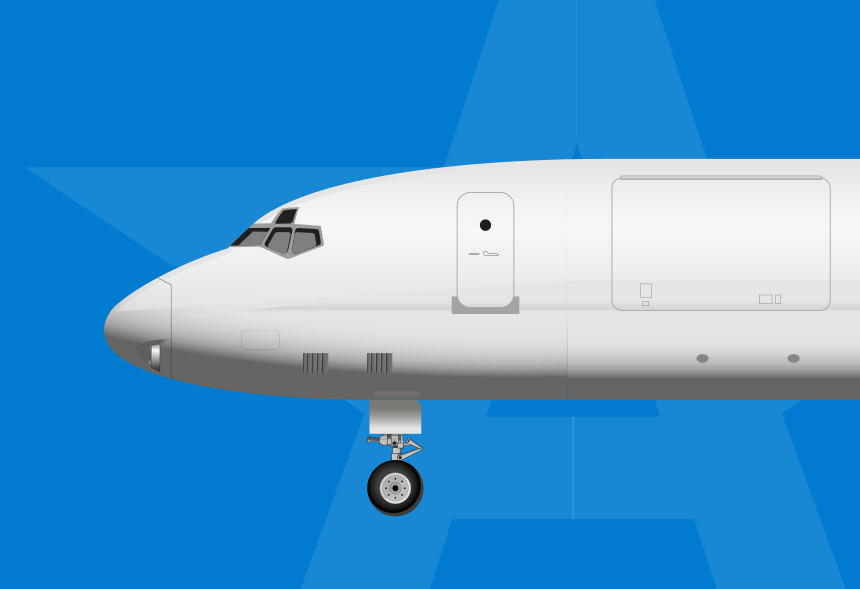
Boeing 727‑200F

Boeing’s lone trijet sports three engines under a T‑tail and was built for short hops from small airports, seating up to 155 in passenger trim.

Freighter conversions add a reinforced fuselage, stronger floor, and a large forward cargo door for rapid loading.

The triple‑engine layout boosts short‑field performance over twin‑jets, letting the 727 operate from shorter runways and remote strips with ease.

Learn More About the Boeing 727‑200F

Boeing 727-200F-thumb

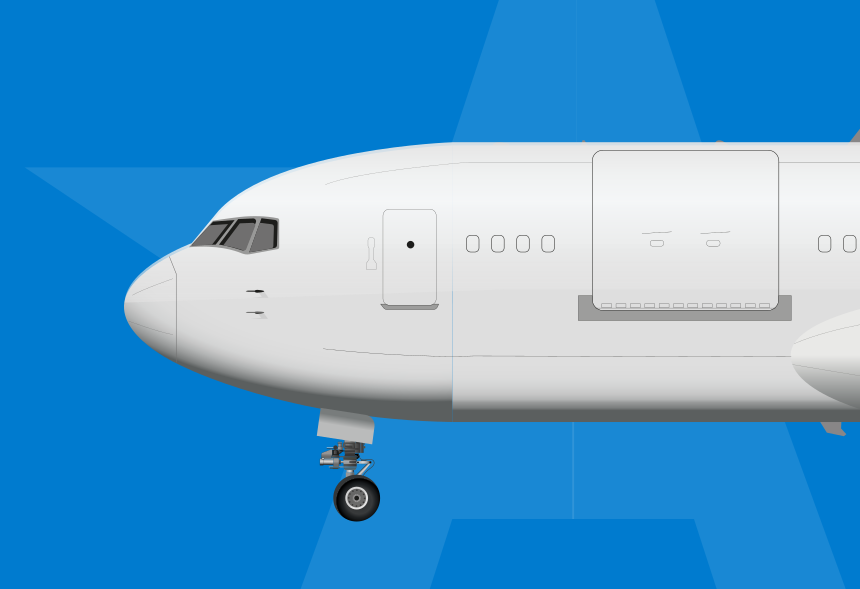
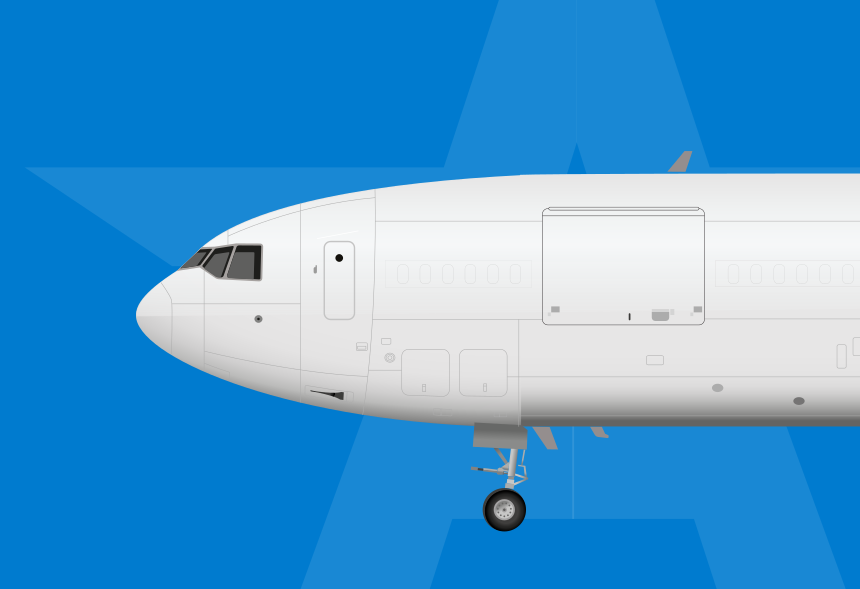
Boeing 767‑200F

This twin‑engine wide‑body serves medium‑ to long‑range freight markets. Derived from the 225‑seat 767‑200 airliner, the freighter carries large payloads on standard pallets, containers, and loose cargo.

Modern engines cut fuel burn versus older wide‑bodies, lowering costs. While built for major hubs, the 767‑200F can also use well‑equipped regional airports with shorter runways, extending service to underserved distribution centers.

Learn More About the Boeing 767‑200F

Boeing 767-200F-thumb

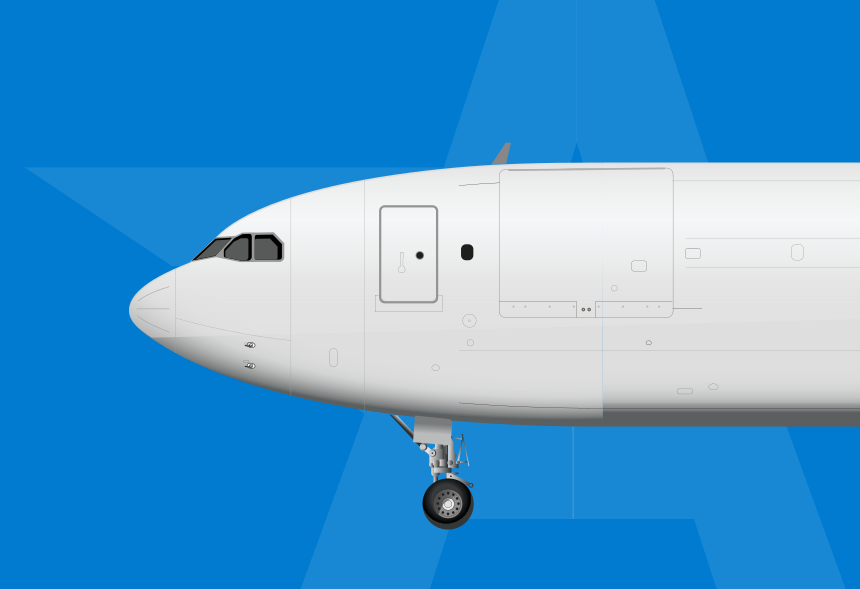
Airbus A300-600F

This mid‑capacity, twin‑engine freighter hauls about 48 t over 4,000 km and fits 21 main‑deck pallets—ideal for regional and medium‑haul routes.

Its roomy fuselage and proven reliability keep it in demand across North America and Europe. Operators like UPS rely on the A300‑600F for high‑cycle express runs, valuing its ability to handle bulky loads and turn quickly in hub‑and‑spoke networks.

Learn More About the Airbus A300-600F

Airbus A300-600F-2

McDonnell Douglas DC-10F

This legacy trijet freighter once filled FedEx and other integrator fleets. It lifts about 70 t across 3,800–4,000 nm, suiting medium‑haul and transcontinental legs. A wide fuselage and spacious main deck accept high‑volume loads and standard pallets.

Although newer, more efficient freighters are phasing it out, the DC‑10F remains with a few operators, prized for its reliable, straightforward design that balances speed, cost, and capacity.

Learn More About the McDonnell Douglas DC-10F

McDonnell Douglas DC-10F-2

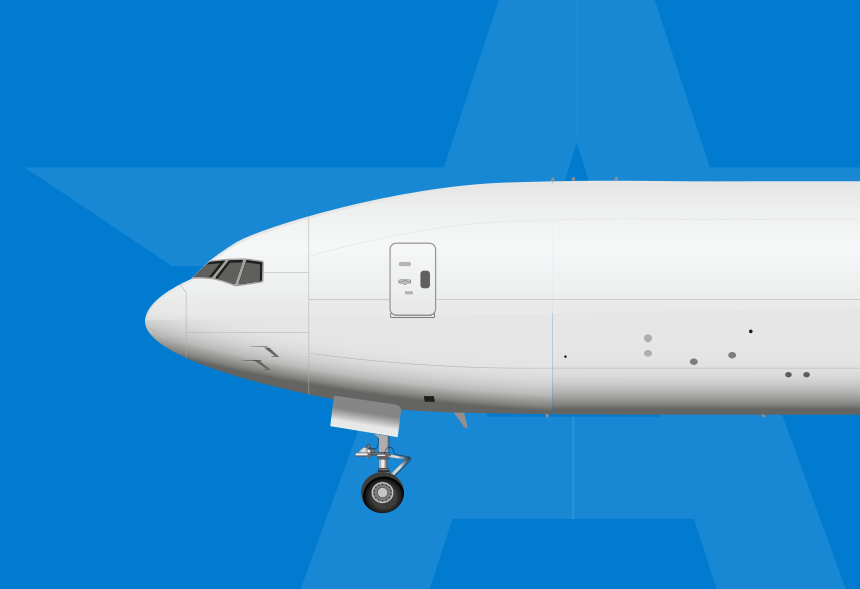
Boeing 777‑200F

The freighter version of the world’s largest twin‑engine wide‑body hauls more payload, farther, than any rival twin. Fuel‑efficient, high‑thrust engines and advanced systems cut fuel, maintenance, and overall operating costs.

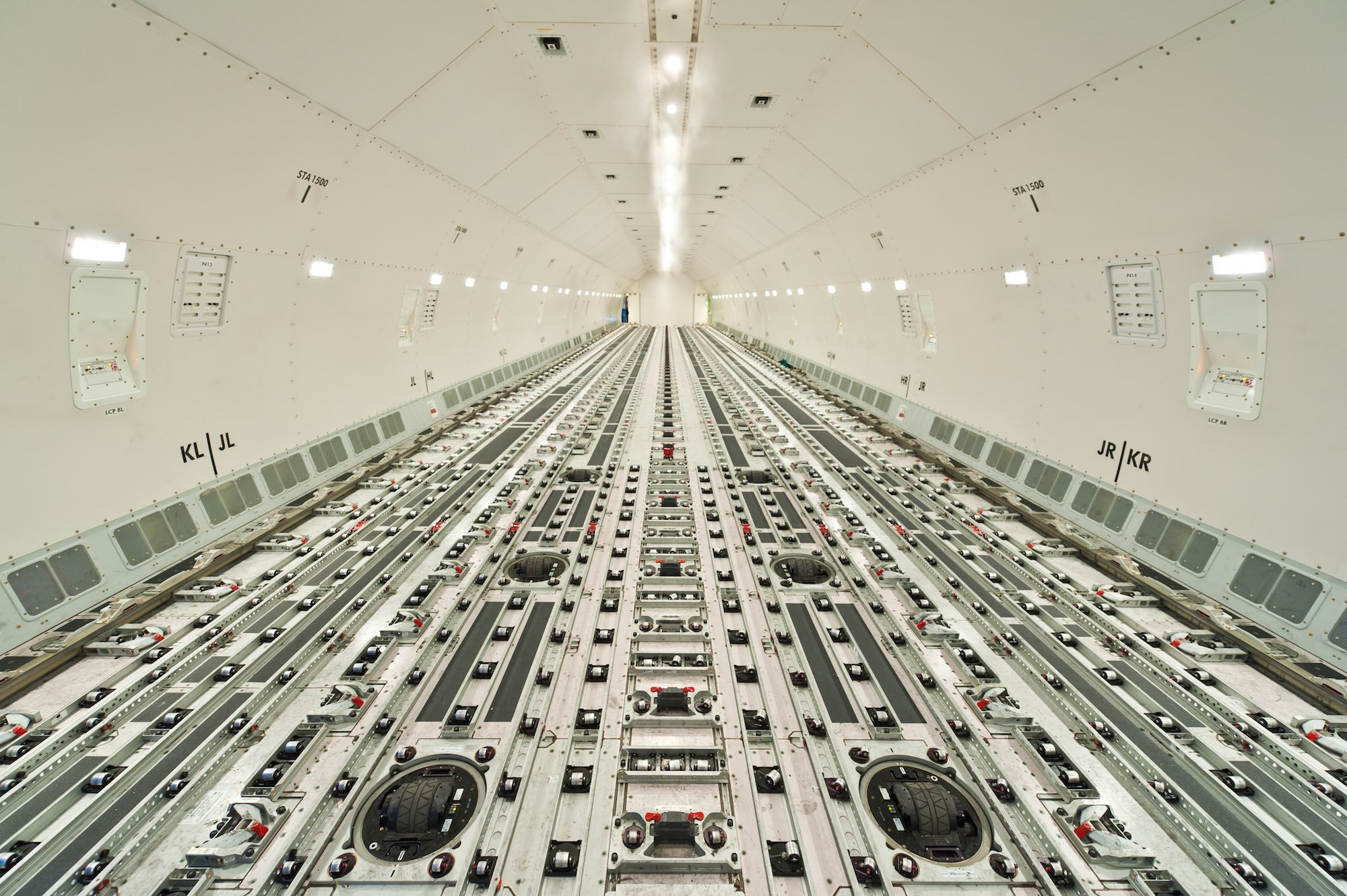
Oversize loads roll aboard through a large left‑side main‑deck door, while two lower‑deck doors take containers and loose freight.

Compatible with any airport that accommodates wide‑body jets, the 777‑200F pairs long‑range reach with twin‑engine economy.

Learn More About the Boeing 777‑200F

Boeing 777-200F-thumb

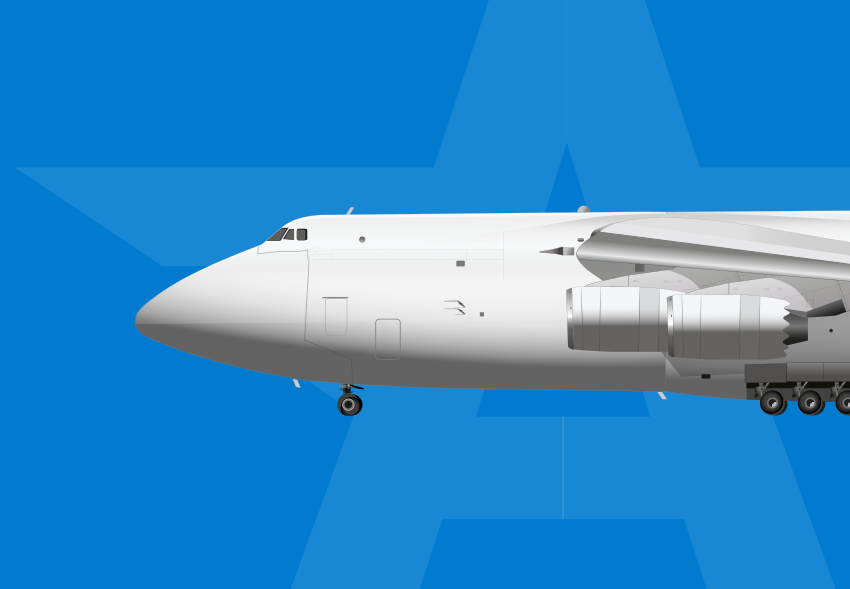
Antonov An-124

This heavy‑lift freighter hauls up to 150 t via a nose‑loading ramp, onboard cranes, and a cavernous main deck that swallows outsized gear—industrial equipment, helicopters, even railcars.

Its military pedigree and specialized kit make it the go‑to option for aerospace, oil‑and‑gas, and humanitarian missions. Though rarer than standard wide‑body freighters, the An‑124 fills the niche for loads beyond any other jet’s limits, flying mainly for Antonov Airlines and Volga‑Dnepr on ad‑hoc charters.

Learn More About the Antonov An-124

Antonov An-124-1

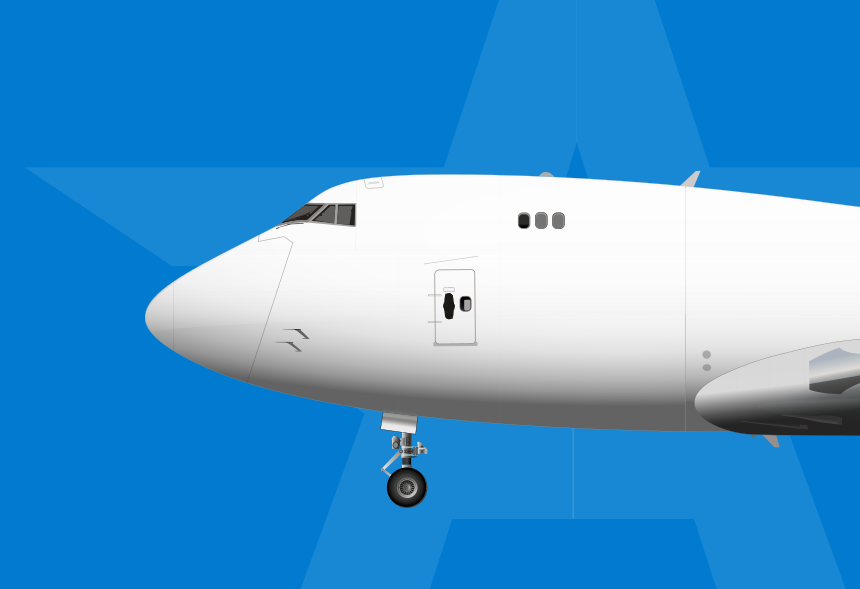
Boeing 747-400F

This iconic wide‑body freighter hauls up to 112 t, fitting 30 standard 96 × 125‑in pallets on the main deck plus containers below. A nose‑loading door speeds loading of oversized machinery, aerospace parts, and auto components.

With about 4,445 nm (8,240 km) range, the 747‑400F links major hubs across Asia, Europe, and North America—and remains a go‑to for time‑critical or heavy‑lift charters.

Learn More About the Boeing 747-400F

747-400F-thumb
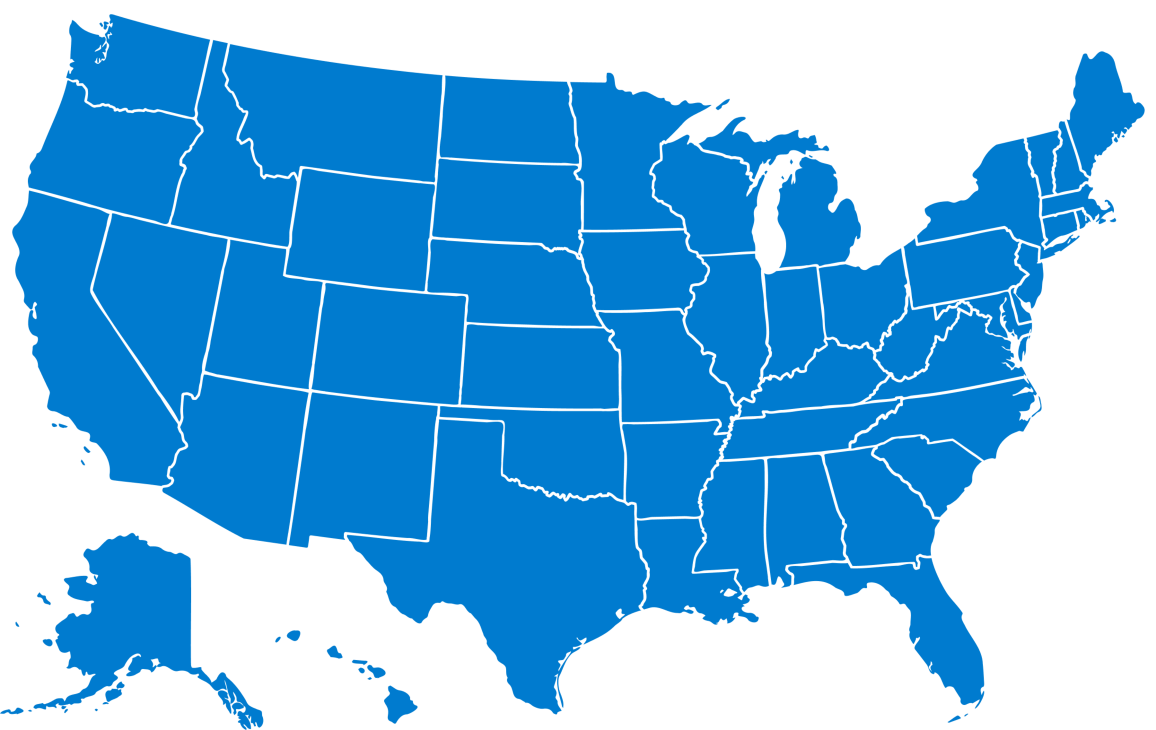
Map of the United States

Wherever You Need Us, You'll Find Us

We're proud to serve customers across the United States with custom shipping solutions designed to meet urgent needs. Browse by state to view services in your area.

AREAS WE SERVICE

CARGO AIRCRAFT DEEP DIVE

Everything You Need to Know About Cargo Aircraft Services

Air Charter Broker

How Air Cargo Charter Services Operate

Air Charter Cargo Aircraft Charter Broker

When standard air freight services cannot meet your timeline or capacity requirements, an air cargo charter provides a direct solution by dedicating an entire aircraft to your shipment. Unlike scheduled airline cargo, a charter moves on your schedule, to your preferred routing, without the constraints of commercial departure windows.

Choosing the Right Cargo Aircraft for Your Shipment

Selecting the correct cargo type and aircraft configuration is one of the most consequential decisions in the charter process. Freighters range from small turboprops handling a few hundred pounds to wide-body jets capable of carrying oversized industrial equipment. Your air charter broker will match the aircraft to your freight dimensions, weight, and final destination requirements.

Working With an Air Charter Broker

An experienced air charter broker manages the sourcing, vetting, and contracting of air carriers on your behalf. They verify that freight carriers meet industry standards for safety and operational compliance, negotiate terms, and coordinate ground handling at both origin and destination. Brokers with access to a global network can source aircraft in markets where capacity is tight or where specialized freighter types are needed.

Once you request an air charter quote, the broker evaluates available aircraft, routing options, and any regulatory requirements specific to your cargo type. Turnaround on quotes for time sensitive cargo is typically fast, often within the hour for domestic charters.

The air charter service model works particularly well for valuable cargo, oversized freight, or shipments that cannot tolerate the consolidation delays common in standard air freight shipping. Having a dedicated team coordinate the full movement from pickup to delivery reduces the risk of miscommunication across multiple handling points.

Request an Air Charter Quote and Move Your Freight Today

Request a Quote

Get an Air Charter Quote for Your Shipment

Cargo aircraft charters are priced based on shipment dimensions, weight, and route. The fastest way to understand your options is to connect with the AirFreight.com team directly. Your account manager will evaluate the right expedited shipping option, whether that is a full-plane cargo aircraft rental, same day air, or a combined air and ground solution, and return a quote built around your actual shipment.

AirFreight.com's logistics services cover the full move, from aircraft sourcing through delivery. A dedicated specialist manages freight carriers, ground handlers, and hot shot services under a single point of coordination, so your freight arrives on schedule without the complexity of managing multiple vendors.

If your shipment cannot wait for standard freight, request an air charter quote now and get a solution in front of you quickly.

Request a Quote Now

Add your shipment details below, and one of our professional expeditors will contact you within minutes. For immediate assistance on an urgent quote, call (800) 713-8183 with these details handy.

Frequently Asked Questions About Cargo Aircraft Charters and Expedited Freight

What is a cargo aircraft charter and how does it differ from commercial air freight?

A cargo aircraft charter is the exclusive reservation of an entire airplane for a single shipment or customer, meaning no space is shared with other shippers. In contrast, commercial air freight books available capacity on scheduled passenger or freighter flights, which introduces dependency on fixed departure times and available space. Cargo aircraft charters offer flexible routing, custom departure windows, and direct access to the aircraft's full payload. For time sensitive cargo that cannot wait for the next scheduled flight, an air cargo charter provides reliability and speed that standard air freight services cannot match. This dedicated approach is especially practical for oversized loads or urgent industrial freight.

What does dedicated cargo aircraft mean in air freight shipping?

A dedicated cargo aircraft means the entire plane is reserved exclusively for one shipment, eliminating co-loading with other shippers' goods. This matters for air freight shipping because it removes the risk of bumping, rerouting, or delays caused by other freight priorities. Dedicated air cargo is commonly used for time sensitive cargo such as aerospace components, medical equipment, and manufacturing parts where a missed delivery window carries significant financial or operational consequences. When freight arrives at the final destination on its own aircraft, there is no sorting hub consolidation delay, which is a key advantage over commercial routing through shared air carriers.

What is an air charter broker and what role do they play?

An air charter broker acts as an intermediary between shippers and aircraft operators, sourcing the most suitable airplane for a specific shipment based on cargo type, weight, dimensions, origin, and destination. Brokers maintain access to a global network of air carriers and can secure an air charter quote quickly, often within hours. Rather than holding their own fleet, brokers leverage relationships across the market to match freight requirements to available aircraft charter options. This is valuable when capacity is tight or when a shipment requires a specialized aircraft configuration. A reputable air charter broker also ensures compliance with aviation regulations and industry standards throughout the process.

What types of cargo are typically moved on charter aircraft?

Cargo aircraft charters handle a wide range of freight that standard commercial routing cannot easily accommodate. Common cargo types include oversized industrial equipment, automotive parts, aerospace components, oil and gas supplies, live animals, humanitarian aid, and valuable cargo such as electronics or fine art. The cargo type often determines which aircraft is selected, since payload limits, floor strength, and door dimensions vary significantly across airplane models. Air freight services built around charter options can also handle hazardous materials when proper documentation and aircraft configurations meet regulatory requirements. Air cargo charter is particularly well suited to shipments that are irregular in size, high in value, or extreme in urgency.

What is same day air freight and when is it used?

Same day air freight refers to air freight shipping where the cargo departs and arrives within the same calendar day, often using the next available flight or a chartered airplane. Same day delivery is typically triggered by production line stoppages, critical part failures, medical emergencies, or event logistics where any delay causes cascading costs. Same day air is distinct from overnight shipping, which guarantees next-morning delivery rather than same-day arrival. Expedited freight solutions that include same day air often involve coordination across air carriers, ground transport to the departure airport, and last-mile delivery at the destination. This expedited option is one of the fastest available in commercial logistics services.

What is hot shot trucking and how does it fit into expedited logistics?

Hot shot trucking is a ground-based expedited freight service that uses smaller, dedicated vehicles such as sprinter vans, straight trucks, or flatbeds to move urgent freight faster than standard truckload carriers. Unlike full truckload shipping, hot shot delivery typically involves a single dedicated run for one shipment, reducing handling and eliminating hub stops. Hotshot services are commonly used when air freight is unavailable, impractical, or too costly for the load size. A hot shot trucking company often operates regionally, covering same day or overnight shipping distances by road. Hot shot shipment options integrate naturally into broader expedited logistics chains alongside air cargo, especially for the ground leg to or from an airport.

What is the difference between expedited freight and standard freight shipping?

Expedited freight shipping prioritizes speed over cost efficiency, using dedicated vehicles, direct routing, and faster transit modes to move freight faster than standard schedules allow. Standard freight shipping typically consolidates loads, uses scheduled departure windows, and accepts longer transit times in exchange for lower rates. Expedited freight services eliminate these trade-offs by assigning a dedicated team, bypassing intermediate sorting facilities, and choosing the fastest available mode, whether that means dry vans, semi trucks, or air cargo. An expedited shipment is typically triggered by supply chain disruptions, missed production deadlines, or critical inventory shortages where the cost of delay exceeds the premium for speed.

What does capacity mean in the context of air cargo and expedited freight?

Capacity in air cargo refers to the available payload weight and dimensional space on a given aircraft or flight at a specific time. During periods of high demand, capacity on commercial air freight routes can become extremely limited, driving shippers toward air charter service as an alternative that bypasses shared-space constraints. In expedited freight, capacity refers more broadly to the availability of expedited carriers, vehicles, and routing options within a given timeframe. When standard capacity is exhausted, expedited freight solutions such as cargo aircraft charters, hot shot trucking services, or dedicated sprinter vans become critical tools for ensuring freight arrives at its final destination on schedule.
What is next flight out air freight?

Next flight out, often abbreviated NFO, is an expedited option in air freight shipping where cargo is booked on the very next available commercial flight departing toward the final destination, regardless of airline or routing. This approach prioritizes immediate departure over cost or direct routing, making it one of the fastest air freight services available without committing to a full aircraft charter. NFO shipments are hand-carried or door-to-door managed by a dedicated team to ensure the freight moves without gap between ground and air legs. Next flight out is commonly used in the medical, automotive, and aerospace industries when production continuity depends on a part arriving within hours rather than days.

What is a straight truck and when is it used in expedited ground freight?

A straight truck is a single-unit commercial vehicle where the cab and cargo box are mounted on the same chassis, as opposed to a tractor-trailer configuration. Straight trucks are a common vehicle type in hotshot trucking and expedited ground freight because they are more maneuverable in urban environments and can access locations that semi trucks cannot. In expedited freight services, straight trucks typically handle mid-sized loads that exceed the capacity of sprinter vans but do not require a full flatbed or dry van. They are a practical expedited option for same day delivery of industrial parts, construction supplies, or manufacturing components across regional distances.

How does an airplane's configuration affect air cargo suitability?

An airplane's cargo suitability depends on several configuration factors including door height and width, main deck floor load limits, total volumetric capacity, and whether the aircraft is fitted with standard freight pallets or bulk loading. Freighter-configured aircraft, such as converted passenger jets or purpose-built cargo planes, offer significantly greater flexibility than belly-hold space on passenger flights. For oversized or heavy air cargo, selecting the right aircraft type is essential to ensuring the cargo type physically fits and that weight is distributed within certified limits. An experienced air charter broker evaluates these factors when sourcing aircraft charter options, ensuring the airplane selected matches the freight's exact physical requirements and complies with industry standards.
What is the role of ground transportation in an air freight logistics chain?

Ground transportation bridges the gap between origin facilities and departure airports, and again between arrival airports and the final destination. In air freight shipping, the ground leg often determines whether a tight schedule holds together. Expedited carriers using hot shot trucking services, sprinter vans, flat beds, or straight trucks are commonly deployed for these connections, especially when time sensitive cargo cannot wait for standard pickup windows. For cargo aircraft charter operations, coordinating both the air and ground segments through a unified logistics services provider reduces the risk of handoff delays. A dedicated team managing end-to-end visibility ensures freight arrives on time across every mode in the chain.


CTA Hero Star Background
TOP