Skip to content

Air Cargo Charter in Texas

Texas plays a unique and outsized role in the North American freight and logistics landscape. With its expansive geography, diverse industrial base, and globally connected transportation infrastructure, the state functions as both a major origin and destination for domestic and international freight. Air cargo charter services have become an essential tool for Texas shippers and logistics professionals managing expedited freight, high-value cargo, and time-critical supply chains.

Unlike standard air freight transportation, air cargo charter offers a highly flexible and customized logistics solution. For Texas-based shippers facing tight deadlines, production shutdown risks, or complex routing requirements, charter air freight often provides the fastest and most reliable path from origin to destination.

In a state as vast and economically dynamic as Texas, companies often face urgent freight delivery demands that traditional shipping methods or scheduled flights can’t meet. This is where on-demand air freight solutions – dedicated charter flights arranged on short notice – come into play. They provide unmatched speed, flexibility, and reliability for time-critical shipments.

WHAT IS AIR CARGO CHARTER?

An air cargo charter is a fully dedicated flight arranged specifically for a shipper’s freight, using a privately hired aircraft. Unlike regular air freight where your shipment shares space on scheduled airlines, a charter flight carries your cargo exclusively on your schedule. For Texas shippers, this means if you have an urgent or unusual shipment – for example, an oilfield component that must go from Houston to West Texas immediately – you can charter a plane to take it directly there. The charter bypasses the constraints of commercial routes and timetables, providing a bespoke solution for time-critical or special-circumstance deliveries. In a logistics hub like Texas, air cargo charters support businesses by ensuring that no matter how urgent or remote the need, freight can be moved quickly point-to-point without waiting on the next available scheduled service.

Lorem ipsum dolor sit amet, consectetur adipiscing elit

AirFreight.com by the Numbers

#1%

Shipping, trucking, & logistics company

5/5

from 1,140+ verified reviews

50,000+

Traceable delivery vehicles

24/7/365

Support and tracking information

TALK TO AN EXPEDITOR NOW

Get a Quote in Minutes for Your Time-Critical Freight Needs

hero-cargo-air

Texas: A Strategic Hub for Expedited Air Freight

  • Texas is a powerhouse of commerce and transportation. The Lone Star State handles a significant share of U.S. freight, and while air cargo represents a small fraction of Texas’s total freight tonnage (less than 1%), it carries an outsized value and importance. Nearly 1.8 million tons of air cargo (worth about $258 billion) moved through Texas airports in 2019 – a testament to the state’s role as a logistics hub.
  • Air freight is the fastest-growing freight mode in Texas. And it's projected to grow over 250% by 2050, reaching more than 4.6 million tons annually. Major airports like Dallas/Fort Worth International (DFW) and Houston Intercontinental (IAH) rank among the nation’s busiest cargo hubs, each handling hundreds of thousands of tons of freight every year. This extensive air infrastructure – bolstered by other cargo-capable airports in Austin, San Antonio, El Paso and beyond – gives Texas shippers a strong foundation for expedited logistics.
  • Texas offers strategic advantages for air logistics. The Lone Star state is situated centrally in the southern U.S. and serves as a crossroad for North American trade and a gateway to Latin America. A charter flight from Texas can reach either U.S. coast in a few hours or connect to Mexico, Canada, and overseas destinations with ease. The state’s size and dispersed industries also mean purely ground-based shipping can be time-prohibitive (it can take a truck over 10 hours just to drive from Houston to El Paso). By contrast, an on-demand cargo flight can hop between Texas cities or to neighboring states in a fraction of the time.

Oil & Gas

Energy companies in Texas frequently operate in remote oilfields, offshore rigs, and sprawling refineries. When a drilling platform or refinery has an unexpected breakdown, every hour of downtime can cost tens of thousands of dollars. Air charters fly out replacement parts, tools, and skilled personnel at a moment’s notice to sites like the Permian Basin or Gulf Coast rigs, preventing extended production halts. Charters can also handle bulky equipment (pumps, valves, even pipeline sections) that would be impractical to send via normal flights. In the oil & gas sector, charter planes essentially serve as a rapid-response unit to keep operations flowing and avoid multimillion-dollar losses from unplanned stoppages.

oil-1

Aerospace & Aviation

Texas is a major player in aerospace manufacturing and also home to airline hubs – meaning there’s constant movement of aircraft parts and technology. Aircraft on Ground (AOG) emergencies are a prime example: if an airliner is grounded in Dallas due to a part failure, the airline might charter a small jet immediately to bring in the replacement part from elsewhere, rather than canceling flights for days. Aerospace manufacturers (in areas like Fort Worth or Houston’s Space City) likewise use charters to ship sensitive components or satellite hardware on tight deadlines. When precision parts need to be somewhere fast, or when timing is critical for a launch schedule, a dedicated air cargo charter ensures those high-value items get there safely and on schedule.

aerospace-engine

Medical & Healthcare

In the medical field, speed can be a matter of life or death. Texas’s hospitals and medical suppliers utilize air charters to expedite critical shipments such as transplant organs, medical isotopes, life-saving pharmaceuticals, and PPE supplies. For example, if an organ becomes available in another state for a patient in Texas, an immediate charter flight can be arranged to bring it directly to the transplant team within hours. During the COVID-19 pandemic, chartered aircraft were used to rush PPE and vaccines into Texas communities when supply chains were strained. Even outside of crises, laboratories might charter a small plane to send diagnostic samples quickly to specialized facilities. Air charters provide the secure, climate-controlled, and fast transport needed for sensitive medical cargo that simply cannot be delayed.

pharma-industry

Manufacturing & Automotive

Texas hosts a wide range of manufacturing – from electronics in Austin to automotive assembly in San Antonio – often operating on just-in-time supply chains. If a production line is waiting on a crucial component that’s been delayed (due to, say, a supplier issue or port holdup), an air charter can deliver that component overnight and avert a costly shutdown. Manufacturers also use charters to ship out finished products for rush orders or to maintain lean inventories. For instance, an equipment manufacturer may get a custom order that must be delivered immediately to clinch a deal – a charter can fly the product to the client far quicker than any truck or scheduled cargo flight. In the automotive sector, urgent recall parts or factory tooling might be flown in via charter to keep assembly lines humming. The flexibility and direct service of charters align perfectly with the high-stakes timelines in modern manufacturing.

automotive-air-charter

E-Commerce & Retail

In the era of next-day delivery and fickle consumer demand, retailers and e-commerce companies sometimes find themselves in a pinch to restock inventory or fulfill a surge of orders. Texas, with its huge consumer base and distribution centers, sees spikes around holiday seasons and big sales events. When inventory in a Dallas fulfillment center runs low unexpectedly, or a popular product needs to be redistributed quickly across the country, retailers may charter a cargo aircraft to reposition stock overnight. Air cargo charters give them a way to meet delivery promises despite supply chain hiccups. Additionally, high-value retail goods (like luxury fashion or electronics for a product launch) might be flown in by charter to ensure they arrive for a time-sensitive release event. In short, charters offer Texas retailers a critical backup plan to keep shelves stocked and customers satisfied when standard logistics can’t keep up with the pace of sales.

hero-warehouse
Expedited Freight Solutions

When to Use an Air Charter: Key Scenarios

Air cargo charter isn’t an everyday solution for most shipments – due to cost, it’s typically reserved for situations where the need justifies the expense. Here are some scenarios where a charter flight is most valuable for Texas shippers:
Manufacturing-1

Supply Chain Disruptions

When an unexpected disruption threatens to delay your freight significantly, a charter can be the recovery plan. This includes cases like a supplier’s production line going down, a cargo ship arrival being missed, or a sudden breakdown in transportation infrastructure. Texas companies have used charters to bypass port congestion (flying in components that were stuck on container ships) and to bridge gaps when a regular carrier failed to deliver on time. In essence, if your supply chain hits a snag that could halt operations or sales, an on-demand charter flight can fly over the roadblocks and keep your business on track.
loading-airplane

Emergency Situations

Not every emergency is weather-related, but Texas faces its share of natural disasters (hurricanes, floods, winter storms) where normal logistics collapse. Charters are often the first resort for emergency air cargo in Texas during such crises. Relief organizations and companies will charter aircraft loaded with generators, food, medical supplies, and repair equipment to affected areas, especially when roads are impassable. Even on a smaller scale, “emergency” can mean a critical machine in a factory broke down or a customer’s system is offline waiting for a part – scenarios where time lost equals money lost. If overnight is not fast enough, a charter can sometimes deliver in mere hours. The ability to mobilize quickly, and even reach areas with damaged infrastructure (using smaller airports or helicopter charters if needed), makes air charters indispensable in emergencies.
gear

Seasonal Surges & Deadlines

During peak seasons or special projects, volume spikes or hard deadlines can strain standard logistics. For example, ahead of the winter holidays, a retailer might find their normal air freight allocations are full – chartering a plane can bring in additional inventory just in time for the sales rush. Similarly, if a Texas business has a firm deadline (product launch, trade show, contract cutoff) that standard shipping would barely meet (or risk missing), a charter provides guaranteed capacity and timing. Companies also use charters to handle seasonal overflow, ensuring that customer deliveries remain on schedule even when demand temporarily outpaces the usual supply chain throughput.
Location

Remote or Infrastructure-Challenged Destinations

One of the greatest advantages of charter flights is the ability to serve locations that aren’t well-connected by regular flights. Within Texas, there are production sites, mines, and communities far from major airports. Rather than trucking hours from the nearest hub, it can be faster to send a small charter aircraft right to a local airfield. Additionally, Texas businesses that need to ship to or from our neighbor Mexico (or other international sites) may find charters useful when the origin or destination is off the beaten path. For instance, oil drilling equipment might need to go from Houston directly to a remote site in South America – a charter can often fly nonstop, whereas a commercial route would require multiple connections. Whenever you’re dealing with hard-to-reach places or minimal infrastructure, chartering an aircraft ensures that distance and location won’t impede a timely delivery.

AF Icon

Time-Critical Shipments

Time-critical shipments are one of the most common drivers for air cargo charter use in Texas. When production lines are down, aircraft are grounded due to missing parts (AOG situations), or contractual delivery deadlines carry significant financial penalties, charter aircraft provide immediate lift without waiting for scheduled capacity. Texas-based industries such as aerospace, manufacturing, energy, and technology frequently rely on charter solutions to move critical components within hours rather than days. Air charter allows for point-to-point routing between Texas airports, minimizing handling and eliminating delays caused by hub congestion or ground transport bottlenecks. This level of speed and control is essential when every hour of delay translates directly into lost revenue or operational disruption.
SDD Icon

Oversized or Heavy Cargo

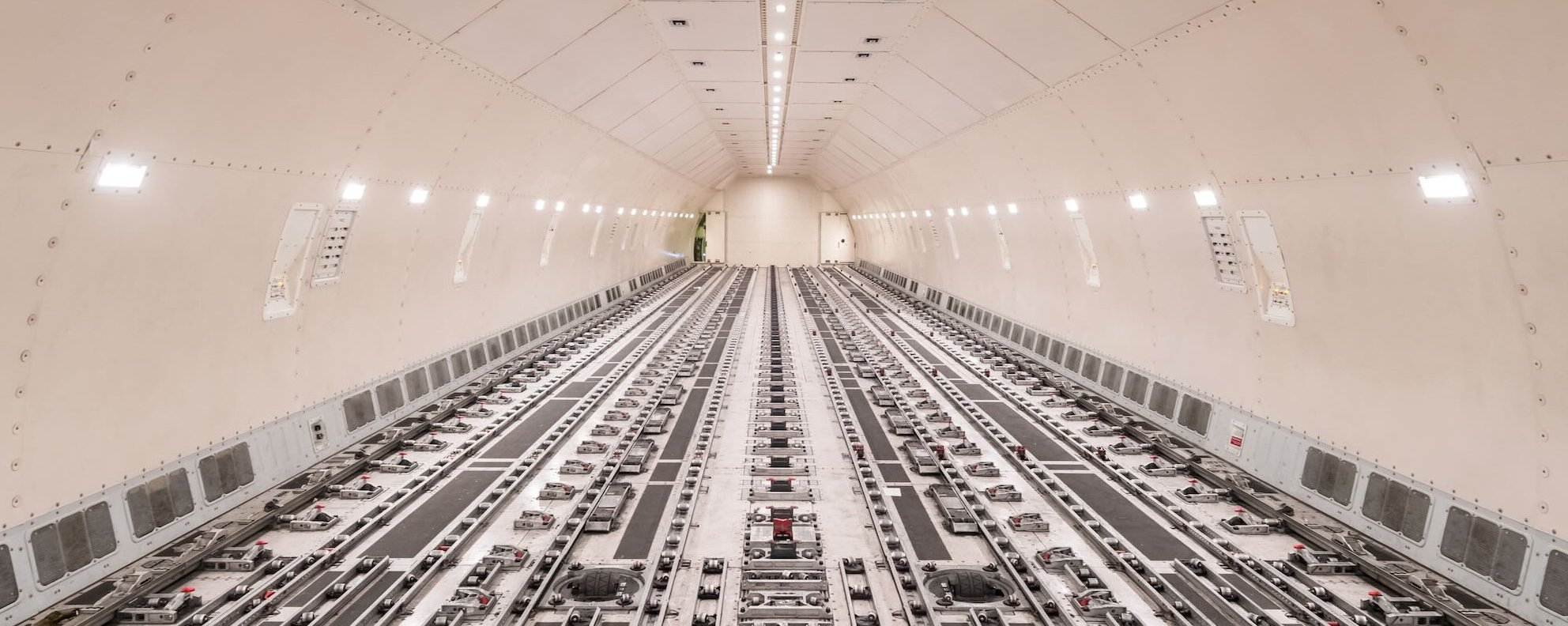
Oversized or heavy cargo often exceeds the dimensional or weight limits of standard air freight and is poorly suited for expedited trucking across long Texas distances. Air cargo charter aircraft are specifically selected to accommodate large, irregular, or high-density shipments such as industrial machinery, oilfield equipment, aerospace structures, or specialized tooling. In Texas logistics, charter services enable direct loading through large cargo doors and customized load planning to ensure safe transport. This is particularly valuable when cargo must move quickly between manufacturing facilities, ports, and inland destinations. By using dedicated freighter aircraft, shippers avoid disassembly, multiple transfers, and extended transit times, while maintaining schedule certainty for critical projects.
Scan Package

Just-In-Time Manufacturing Support

Just-in-time manufacturing is widely used across Texas industries to reduce inventory costs and improve efficiency, but it leaves little margin for supply chain disruption. When a critical component fails to arrive as scheduled, air cargo charter becomes an essential solution to keep operations running. Texas manufacturers in sectors such as automotive, electronics, aerospace, and industrial equipment rely on charter aircraft to move urgent parts directly from suppliers to production facilities. Unlike scheduled freight, charter flights can be launched immediately and routed to the closest suitable airport, reducing downtime. This flexibility helps manufacturers maintain output, meet customer commitments, and avoid costly shutdowns caused by even short-term material shortages.
delivery

International Gateways and Cross-Border Freight

Texas serves as a major international logistics gateway, particularly for trade with Mexico, Latin America, and global markets. Air cargo charter is often used when international or cross-border shipments require precise timing, enhanced security, or specialized handling. Charter aircraft operating through Texas hubs such as Dallas–Fort Worth and Houston allow shippers to control schedules, avoid congested commercial lanes, and coordinate seamlessly with customs and ground transport providers. This is especially important for high-value goods, critical industrial components, or urgent export and import shipments. By using air charter, Texas-based companies can maintain supply chain continuity and meet international delivery commitments without relying on limited scheduled capacity.

Pilatus PC-12

The Pilatus PC-12 is a small, single-engine turboprop aircraft frequently used in air cargo charter for short-to-medium range freight movements. It features a generous aft cargo door and the ability to operate from shorter, less developed airfields, making it suitable for remote deliveries or frequent express shipments within Texas and to neighboring states. Its reliability, safety record, and flexibility allow cargo operators to serve a wide range of customers needing urgent or mission-critical freight transport.

Learn More About the Pilatus PC‑12

PC-12-thumb

Cessna 406 Caravan II

The Cessna 406 Caravan II is a small, twin-engine turboprop that cargo charter services use for short-haul deliveries where simplicity and accessibility are priorities. It is valued for its balance of payload capacity and ability to operate in and out of smaller regional airports, which is advantageous for Texas’ expansive geography and numerous industrial and agricultural destinations. This aircraft type is ideal for point-to-point freight that does not require a large freighter.

Learn More About the Cessna 406 Caravan II

Cessna 406 Caravan II-thumb

Piper PA-31

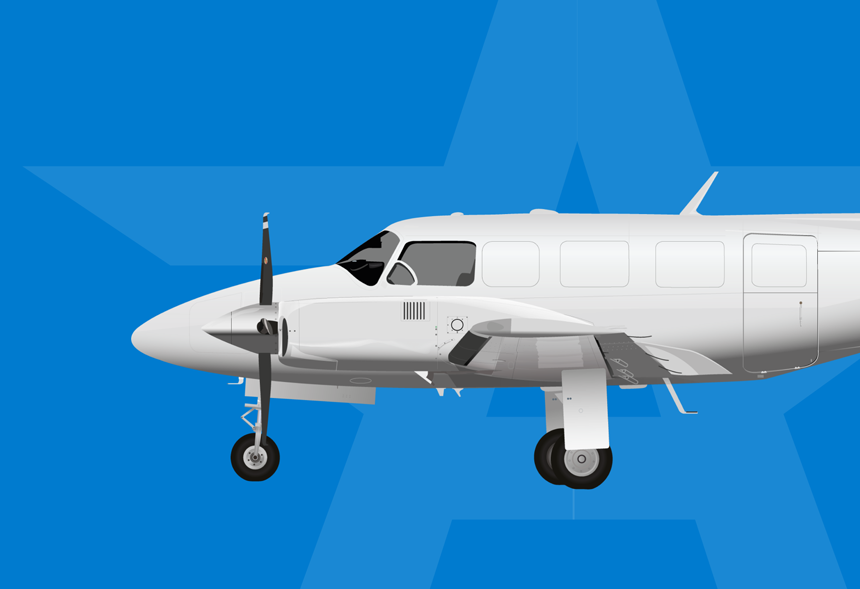
The Piper PA-31, a reliable twin-turbo utility aircraft, serves well in light cargo charter missions where flexibility and short-field performance are needed. With removable seating and a large rear door, the PA-31 can be configured quickly for cargo loads and operate from small rural or regional airports across Texas. Its lower operating costs compared with larger turboprops make it efficient for on-demand freight to smaller communities.

Learn More About the Piper PA-31

Piper-PA-31-thumb

Fairchild Metro II

The Fairchild Metro II is a twin-turboprop regional aircraft that fits between light utility aircraft and larger freighters in payload capability. Characterized by a pressurized cabin and robust reliability, Metro IIs are commonly used for regional freight charter where moderate payloads and frequent take-offs are required. In Texas, this makes them suitable for connecting mid-sized metropolitan areas with regional distribution points or facilities.

Learn More About the Fairchild Metro II

Fairchild-Metro-II-thumb

Fairchild Metro III

The Fairchild Metro III offers similar capabilities to the Metro II but with incremental improvements in performance and payload. Like its sibling, it serves regional charter freight well, especially where runway length and frequency of flights are considerations. Its use in cargo charter within Texas can include time-sensitive freight between major cities and industrial centers without needing a large freighter.

Learn More About the Fairchild Metro III

Fairchild-Metro-III-thumb

Shorts SD-360

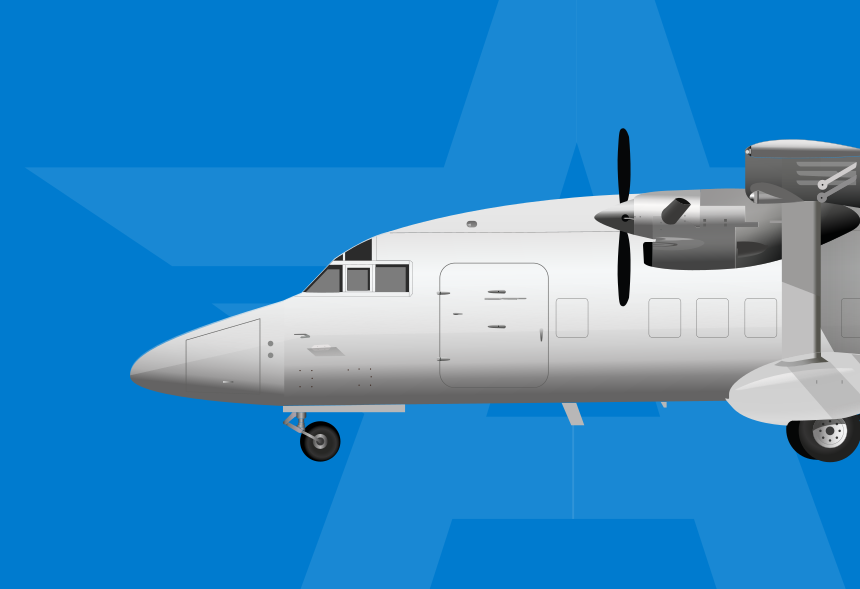
The Shorts SD-360 is a larger turboprop regional aircraft with a boxy fuselage that provides substantial freight volume relative to its size. It is suited to short and medium routes where moderate payload and accessibility to regional airports are needed. In Texas, the SD-360 can serve as a cost-effective bridge between light turboprops and narrow-body jets for freight requiring more capacity than smaller aircraft but not the scale of a jet freighter.

Learn More About the Shorts SD 360

Shorts SD 360-thumb

Convair CV-580

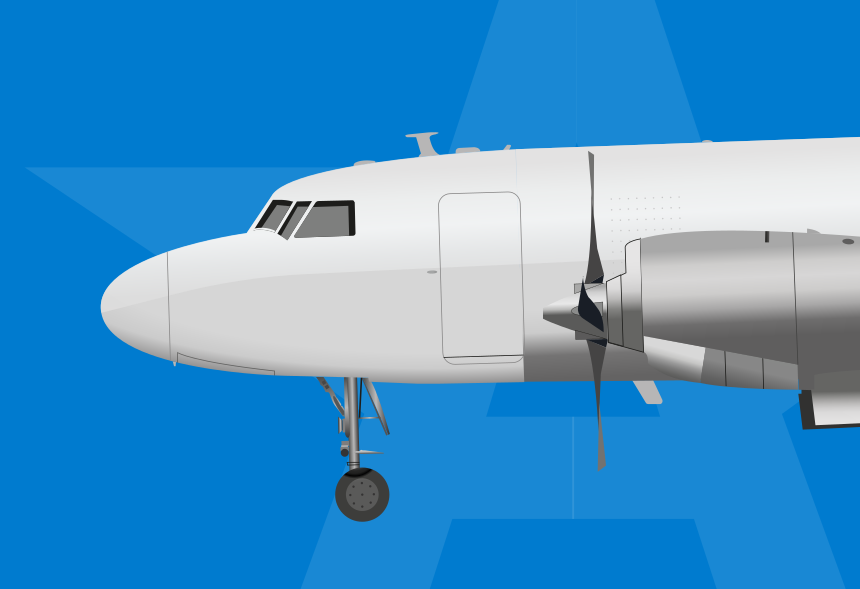
The Convair CV-580 is an older but capable turboprop that cargo charter operators still employ for mid-range freight missions. With a higher payload and greater range than smaller props, it can serve key Texas freight lanes between hubs and secondary markets. Its robust design and cargo door configuration make it a practical choice for operators handling mixed pallets and freight that does not justify a jet charter.

Learn More About the Convair CV-580

Convair CV-580-thumb

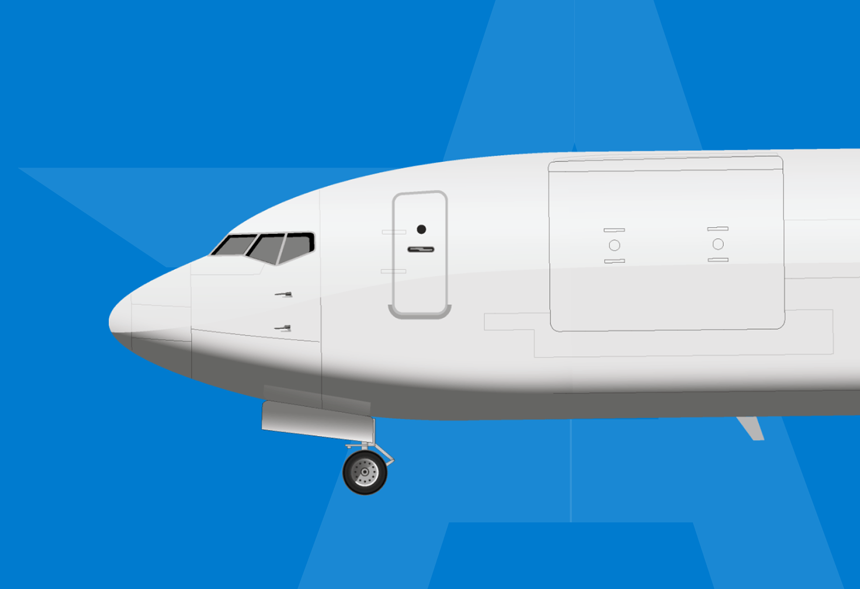
Boeing 737-300F

The Boeing 737-300F is one of the most common narrow-body freighters used in U.S. domestic cargo charter operations. It offers a strong balance of payload (typically several tons), range, and runway performance, allowing operators to serve both major Texas airports (such as Dallas/Fort Worth and Houston) and many regional fields. Its efficiency and fleet prevalence make it a go-to for larger, time-sensitive cargo not suited to turboprops.

Learn More About the Boeing 737‑300F

Boeing-737-400F-thumb

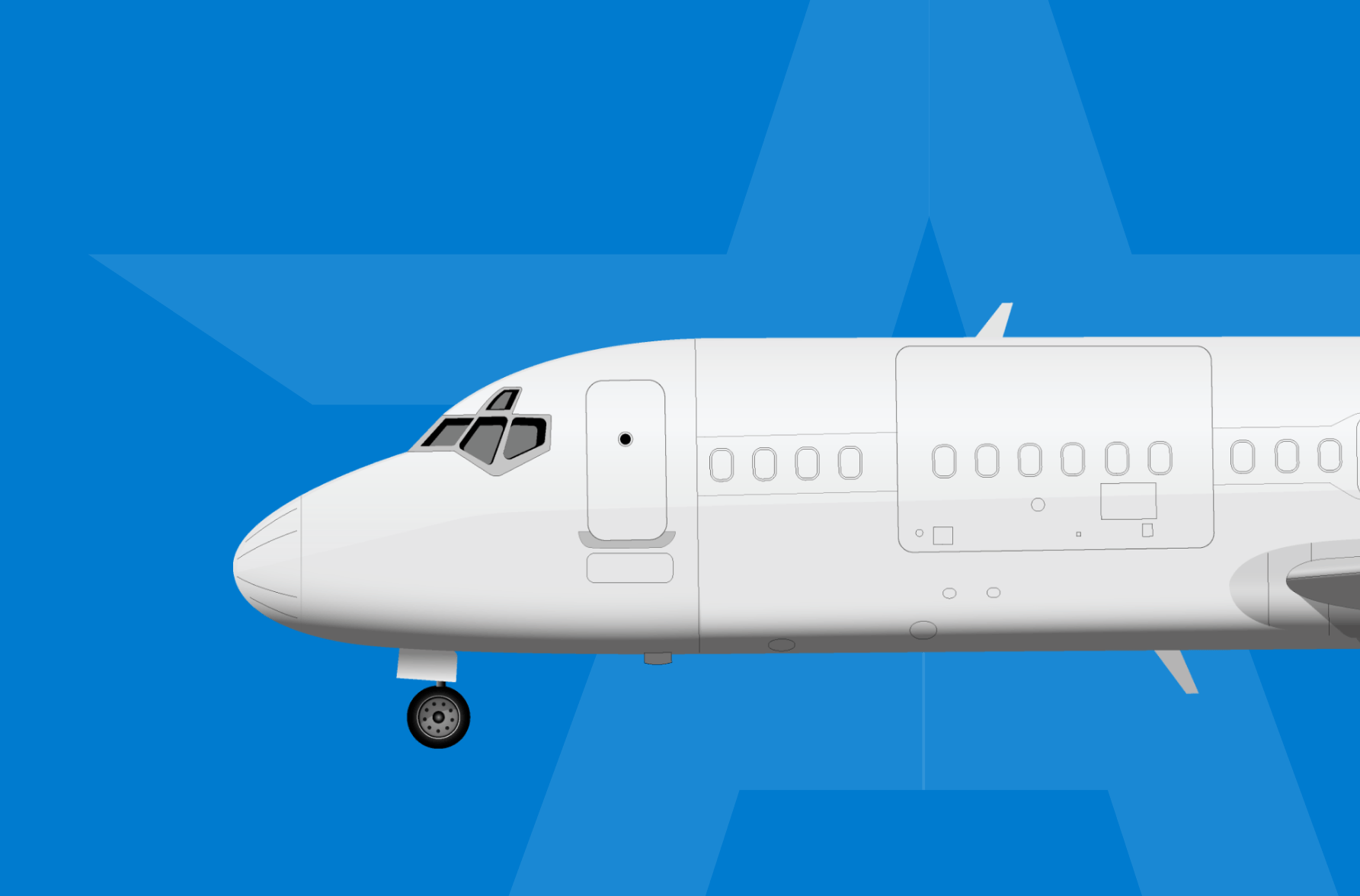
McDonnell Douglas DC-9-15F

The McDonnell Douglas DC-9-15F is a smaller jet freighter that offers significant payload capability with good runway performance, enabling operations into airports that accommodate jets but may not handle larger wide-bodies. In Texas, this aircraft type can serve high-frequency, short-haul freight between primary hubs and secondary markets where larger freighter jets might be less economical. Its use in charter underscores its flexibility for mid-sized cargo volumes on domestic missions.

Learn More About the McDonnell Douglas DC-9 15F

Douglas DC-9-hero-1

Frequently Asked Questions

What is an air cargo charter and how does it support Texas shippers?

An air cargo charter is a fully dedicated flight arranged specifically for a shipper’s freight, using a privately hired aircraft. Unlike regular air freight where your shipment shares space on scheduled airlines, a charter flight carries your cargo exclusively on your schedule. For Texas shippers, this means if you have an urgent or unusual shipment – for example, an oilfield component that must go from Houston to West Texas immediately – you can charter a plane to take it directly there. The charter bypasses the constraints of commercial routes and timetables, providing a bespoke solution for time-critical or special-circumstance deliveries. In a logistics hub like Texas, air cargo charters support businesses by ensuring that no matter how urgent or remote the need, freight can be moved quickly point-to-point without waiting on the next available scheduled service.

How do air charter services differ from standard air freight in Texas?

Air charter services provide on-demand, exclusive use of an aircraft, whereas standard air freight involves booking space for your cargo on a commercial flight or cargo carrier’s schedule. The key differences are flexibility and speed. With a charter, Texas businesses can specify exactly when and where the plane will pick up and deliver their goods – the routing can be direct to smaller airports if needed, and there are no layovers unless you want them. In contrast, standard air freight follows fixed airline routes (e.g., a Dallas to Chicago to New York routing) and departure times that might not align with your urgency. Charters also accommodate special cargo (oversized, hazardous, etc.) more easily, since the entire aircraft is at your disposal. Essentially, choosing a charter is like hiring a private flight for your freight, which is why it’s favored for urgent, critical, or hard-to-transport shipments. The trade-off is cost: air charters are more expensive than scheduled freight, so they’re used when the added speed or custom solution is worth the premium.

When should I consider an air charter instead of other expedited shipping options?

You should consider an air charter when your shipping situation has extraordinary urgency or requirements that other options can’t meet. Some clear-cut examples:

  • Extreme Urgency: If a shipment absolutely must arrive as fast as possible – say a factory is down waiting for a part, or a customer faces an emergency – an air charter can often deliver within the same day or overnight, whereas even expedited ground or next-flight-out air freight might be too slow or uncertain.

  • Remote Destinations: If you need to reach a site that isn’t near a major airport or is overseas with no direct flights, a charter can fly point-to-point. This is common in Texas for oil & gas sites, mines, or small towns without commercial service.

  • Oversized/Special Cargo: If the freight is too large or restricted for normal flights (like an oversized machine or dangerous goods), a charter aircraft can be selected specifically to handle it.

  • Missed Schedules: If traditional logistics failed – for example, a cargo shipment was canceled or delayed and you’re facing a deadline – a charter is the emergency backup to still meet the schedule.
    In summary, opt for a charter when the cost of not delivering on time (in terms of money, safety, or reputation) outweighs the cost of the charter. It’s the best choice for shipments that are unique, urgent, or vitally important.

How fast can an air cargo charter be arranged in Texas?

Very fast – often within a matter of hours. AirFreight.com and similar providers maintain 24/7 operations to field urgent requests. Once you decide to proceed with a charter, a dedicated team springs into action to find an available aircraft, crew, and necessary permits. For many urgent cases, we can have wheels up in 2-4 hours from the time you confirm the order (assuming an appropriate airport is nearby and the cargo can be loaded quickly). Of course, the exact response time can depend on factors like location, aircraft availability, and how quickly the cargo and paperwork are ready. Major Texas airports such as DFW and IAH typically have charter-ready aircraft on standby or short call. Even at night or on a weekend, operators can open the cargo terminal for a charter. The bottom line: air charter services are designed for rapid response. If you have an emergency at 3 AM or a sudden supply chain failure at dinner time, you can reach out and start an on-demand air charter process immediately, with the confidence that a plane could be airborne with your freight often in a few short hours.
Is air charter used for intra-Texas shipments or only long-distance?

Air charters are used for both intra-Texas shipments and long-distance, depending on the urgency and scenario. In-state (intra-Texas) charters happen when ground transit would be too slow or impractical for the shipment’s importance. Remember, Texas is huge – driving from one end to the other can take over 12 hours. If a company in Dallas needs a part delivered to a plant in the Rio Grande Valley the same morning, an air charter can make that possible, whereas even a hot-shot truck would arrive much later. We also see intra-state charters for things like moving critical medical samples from a rural hospital to a big-city lab, or shifting inventory from Houston to Dallas overnight for a retail launch. On the other hand, charters are equally (if not more) common for long-distance and international routes, such as flying Texas-made products to another country on a deadline, or bringing overseas components directly into Texas. Essentially, if the timeline is tight, charters can shrink a multi-day truck journey into a few hours of flight, so they are absolutely utilized within Texas as well as for connecting Texas to far-flung destinations.

Are air cargo charters available 24/7 in Texas?

Yes. One of the major advantages of charter services is round-the-clock availability. Air cargo charters can depart at any time of day or night as needed. Providers like AirFreight.com operate 24/7 control centers to arrange and monitor these flights. Texas’s major cargo airports (DFW, IAH, etc.) also have facilities and customs staff (for international charters) that can operate after-hours for special flights. In practical terms, if you call at 2 AM about an urgent shipment, the process to get a plane in the air can start immediately. There is no waiting until the next business day. The aviation industry refers to this as “on-demand” service, meaning charters go when shippers need them, whether that’s pre-dawn, midnight, or high noon. Keep in mind that very remote or small airports might have limited operating hours (some require advance notice to open late), but a capable charter provider will either navigate those permissions or suggest an alternate nearby airport. Overall, if your emergency can’t wait, air charter is ready to launch at a moment’s notice, 24/7/365.

What types of aircraft are used for air cargo charter services in Texas?

A wide variety of aircraft can be chartered for cargo, ranging from small propeller planes to large cargo jets. The choice depends on the size of the shipment, distance to travel, and available airports. Common aircraft types include:

  • Light Props and Turboprops: Small planes like a Cessna Caravan or Pilatus PC-12 can carry a couple thousand pounds and are great for short hops or reaching small airstrips in Texas. They’re often used for urgent local deliveries or light cargo to rural areas.

  • Light Jets and Regional Aircraft: Business jets (like Learjets or Falcons) or small regional cargo planes (like Embraer EMB-120 or SAAB 340) can carry a few pallets (maybe 5,000–10,000 lbs). These are used for quick inter-city shipments or medium-distance routes. For instance, an aerospace part going from Austin to an assembly plant in Mexico might go on a mid-size jet.

  • Medium to Large Freighters: This includes planes like the Boeing 737 freighter, Boeing 747-400F, or Airbus A300 cargo variant. They can carry tens of tons of freight (a 747 can take 100+ tons) and are used for heavy loads or long-haul charters. If a Texas company needs to fly a large batch of equipment to Europe or Asia overnight, a wide-body freighter might be chartered.

  • Specialty Aircraft: Occasionally, unique planes like the Antonov AN-124 (for super-heavy or oversized loads) or even modified passenger aircraft are chartered for one-off missions. Helicopters can also be chartered for short-range hops where there’s no runway (e.g., delivering to an oil rig or a ship at sea).
    In Texas, you’ll commonly see everything from small twin-engine props up to jumbo jets being used on charter missions, depending on the cargo needs. The good news is that a reputable charter provider will evaluate your specific cargo (weight, dimensions, destination) and suggest the appropriate aircraft to charter – you don’t have to know the exact type yourself. The aircraft selection is part of the service, ensuring you get a plane that’s cost-effective yet sufficient for the job.

What does the term “NFO” mean, and is it different from a charter?

“NFO” stands for Next Flight Out. It’s a term used in air freight to describe shipping something on the very next available commercial flight heading to the destination (or a connecting hub). Essentially, it’s a service where your package or cargo is expedited by piggybacking on passenger or cargo flights that are scheduled, as opposed to chartering a whole aircraft. Here’s how it differs from a charter:

  • Next Flight Out: If you request NFO service, a logistics provider will immediately find the soonest possible flight (it could be a passenger airline or a cargo carrier like FedEx/UPS) that has space for your shipment. They’ll book it and often arrange for rush trucking to get it to the airport and then from the arrival airport to the final destination. You’re essentially buying priority space on an existing flight. For example, if you have a part in Houston that needs to get to Chicago ASAP, they might book it on the next United or American Airlines flight out that afternoon as luggage or cargo.

  • Charter: By contrast, a charter means arranging a dedicated flight that isn’t dependent on airline schedules at all – you specify the timing and route.
    Both are used for emergency shipments. NFO can be more cost-effective if flights are available, especially for small packages, and is commonly used for things like documents, small machine parts, or samples that just need the fastest possible journey via existing flights. Charter is used when NFO isn’t sufficient – for instance, if there is no immediate scheduled flight that can handle your freight (maybe it’s too large, or commercial flights for that route are done for the day, or it needs to go somewhere off the usual network). In Texas, logistics providers might try NFO first for smaller urgent shipments (since there are many flights out of DFW, IAH, etc.), but if that can’t achieve the goal, or if the item is huge or truly time-critical beyond what NFO can do, they move to an air charter solution. Some urgent logistics plans even use a combination: e.g., NFO to a certain point, then charter the rest of the way from an intermediate hub. Both terms reflect the priority nature of shipping, but NFO uses existing routes, while charter creates a new route just for you.

What is “on-demand air freight” exactly?

“On-demand air freight” refers to air cargo services that are available whenever and wherever a customer needs them, rather than on a fixed schedule. This term often describes charter services and other expedite arrangements. Essentially, instead of you fitting your shipment into an airline’s timetable, the air transport is arranged around your timetable. On-demand can take a few forms:

  • Air Cargo Charter: As we’ve been discussing, this is a dedicated plane scheduled on-demand for you.

  • Next Flight Out (NFO): This is a service some logistics providers offer where they book your shipment on the very next available flight (passenger or cargo) out of a given airport. It’s not a private charter, but it is an on-demand booking method to get your freight out as soon as humanly possible.

  • Air Courier/Hand Carry: In some cases, on-demand may mean putting a courier on a commercial flight hand-carrying the item (common for critical documents or small high-value items). While not a charter, it’s arranged at the drop of a hat.
    In all these cases, the idea is immediacy and flexibility. You trigger the request, and the logistics provider finds a solution that departs right away. It contrasts with standard logistics where you might book something days in advance to go on a scheduled run. On-demand air freight is a lifeline for emergencies, providing an avenue to move goods by air with minimal delay. In Texas’s context, a company might call at any hour and say “I need this part in El Paso tonight” – on-demand service means we’ll find a way, via charter or NFO, to make it happen.

How do Texas’s major airports support air cargo charters?

Texas’s major airports are very charter-friendly because they have significant cargo operations and facilities. At Dallas/Fort Worth International (DFW), for example, there are extensive cargo ramps and warehouses, plus it’s a 24-hour airport with customs on site, so charter flights can land and unload any time. In fact, DFW handled over 1 million tons of freight in a recent year, a portion of which included charter movements. The airport has even expanded cargo bays and infrastructure to better handle the growing demand, including charters. At George Bush Intercontinental in Houston (IAH), you have large cargo centers and plenty of widebody freighter parking; IAH is a global oil-and-gas logistics hub, so they regularly host charter carriers (like Antonov heavy-lift planes or military charters) alongside scheduled flights. Both DFW and IAH have specialized handling equipment, ground staff experienced in charters, and good coordination with CBP for quick customs processing on international charter arrivals.

CTA Hero Star Background
TOP